Showing posts with label Financial Empowerment. Show all posts

February 2, 2014

Broke-A$$ Brotha Tip #6: 'As a Man Thinketh, So Is He'

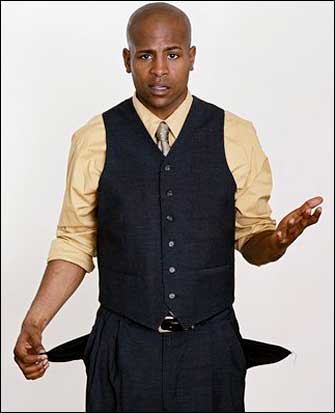
This blog likes to share tips with y'all about ways to increase revenue and decrease expenses ... we call them Broke-A$$ Brotha Tips. They are good for Sistas too!

Sometimes a Broke-A$$ Brotha needs to watch the conversation taking place alone or in the company of others.

'As a man thinketh, so is he.' ~ Proverbs 23:7

Few of us make the connection between that Bible verse and our financial well-being. What we think about money affects our financial well-being!  And our vocabulary is often filled with stinkin' thinkin' in terms of words, statements and opinions that detract from our financial well-being.

Here are some examples:

  1. "I am broke." - Well, not really. Your resources are just not sufficient to meet your current needs or wants. Proper management of money represents opportunities to get your financial house in order.
  2. "I can't afford that." - This statement is a mantra of hopelessness. Even if you are in debt or your finances are such that the amount of funds needed are not currently availalbe, choose to speak words of hope about your finances. If you properly plan and establish priorities in your finances, you can afford whatever you need. Gabby Douglas' mother proved this to the world when she financed the training necessary to train her daughter well enough to win double gold at the 2012 London Olympics.
  3. "I'm a day late and a dollar short." - This statement implies either that you procrastinated or lacked planning ... and neither is good when talking about money. On the other hand, this statement is on-target if you choose not to plan, save and invest. Isn't it time for you to erase that statement from your vocabulary? If so, then simply make the choice to plan, to save, and to invest.
  4. "Saving for a rainy day." - Take the negativity out of saving. Instead of saving for a rainy day, perhaps it is time for us to save for opportunities. Emergencies are merely challenges that test our financial and spiritual growth. Even when emergencies arise, start look forward to how you will grow as a result of the challenge.
  5. "Saving for retirement." - Stop saving for retirement and begin saving for a redirection of life activities. People you know are retiring at 40, 45 and 50 years young ... and they usually start new careers or businesses. Start looking at retirement as a change in life activities -- an opportunity to pursue other goals.
'The poor man and the rich man do not play together' ~ African proverb

Enhanced by Zemanta

September 5, 2013

Village Tip: Improve Your Credit Score

Many villagers have no idea what their credit score is. A credit score is a number that is used to predict how likely you are to pay back a loan. Your credit score starts with the information about you from your credit report. A mathematical formula – called a scoring model – is then used to create your credit score.

You can get a free copy of your credit report at www.AnnualCreditReport.com. The information in your credit report influences your credit score. Unlike your credit report, which you can get at no cost to you, you usually have to pay for your credit score. There are certain instances in which you are entitled to your credit score for free, for example if you are denied a loan on the basis of your credit score.

Studies show that the average person could save about $80 a year on interest by raising their credit score by just 30 points. Here are some ways to improve your credit score:
  1. Pay more than the minimum payment so your balance doesn't build up.
  2. Pay bills on time. If you have been late, paying on time for six to nine months can raise your score. One way to make sure your payments are on time is to set up automatic payments, or set up electronic reminders.
  3. Don't borrow the maximum on any one card, even if there is a low-interest offer. If you ave card with $10,000 in available credit, don't owe more than $6,000. Credit scoring models look at how close you are to being 'maxed out', so try to keep your balances low in proportion to your overall credit limit.
  4. Don't open two or three new cards within a couple of months. This will lower your score.
  5. A long credit history will help your score. Credit scores are based on experience over time. The more experience you have with getting credit and paying your bills on time, the more information there is to determine whether you are a good credit risk.
A credit score of 730 or more will get you favorable rates on credit cards, auto loans and mortgages.

September 3, 2013

Broke-A$$ Brotha Tip #5: Retirement Planning and Investing

It is never too late to begin a program of retirement planning and investing. It would be better if you started sooner ... but, today is the first day of the rest of the life for any Broke-A$$ Brotha (or Sista)!   This blog likes to share tips with y'all about ways to increase revenue and decrease expenses ... we call them Broke-A$$ Brotha Tips.

Part of how Broke-A$$ Brothas get broke is procrastination. There is still time for you to make a commitment to a program of retirement planning and investing to plan for your future ... and the future of your progeny.
  1. Commit to saving for retirement. - Just hoping that you'll have enough money for retirement is not a smart strategy. Social Security alone won't cut it It's wiser to take control of retirement planning yourself by investing in company 401(k) plans and IRA accounts. Also, make a plan to save on a regular basis, whether you start with $50 a month or $5,000 a year.
  2. Create and adhere to a financial plan. - Having a plan enables you to how you can help your family in the fugure. For example, opening and contributing to a college saving fund gives you a sense of relief. There are many people who earn good income but don't think ahead for college education until the children are ready for college. President Obama wants to reduce the cost of college education ... but, we need to do our part.
  3. Don't waste your money. - You want to grow your money not throw your money away. Don't depend on winning the lottery as an investment or retirement fund. Look to investment vehicles such as stocks, bonds and mutual funds. Real estate is also a definite idea for you to consider.
How are you doing with your retirement planning? Investments? How about your savings plan ... do you save a regular amount each month? Being Broke-A$$ ain't something any of us want. Use these tips to jump start your commitment to financial empowerment.

April 8, 2013

Village Tip: 8 Ways to Improve Your Credit Score


The 5th principle of our Declaration of Financial Empowerment pledges us to to engage in sound budget, credit and tax management practices. Dr. Boyce Watkins shared some sound tips with his blog readers about improving our credit scores. I thought that villagers would find these tips of interest as well.
People always want to improve their credit score, not only because a good credit score will help them have a cheaper interest rate when they borrowing money, but also because a good credit score will help their lives much easier. But if you forget to pay several bills on time or did something hurt your credit, what you can do to repair the damage? The following is some tips for improve your credit score.
  1. Always pay your bills on time, but if you missed the deadline, get current and stay current.
  2. If you have problem making the ends meet, you should get in touch with your creditors to help you with managing your credit and pay bills on time.
  3. Pay off debt rather than moving it around.
  4. Don’t close unused credit cards as short-term strategy to raise your score.
  5. Don’t open numbers of new credit cards that you don’t need just for increase your available credit, apply for and open new credit card only as needs.
  6. Don’t close paid-off, old accounts.
  7. Keep balances low on credit cards.
  8. Re-establish your credit history if you have had problems.
Source #1; Source#2; Source #3;
My credit score has taken a beating over the past few years. I plan to use these commonsense tips to improve it. It is never too late to do the right thing!  What say u about credit cards, credit practices or credit scores?

November 9, 2012

Village Tip: Business Cards


We will share occasional Village Tips in support of the Declaration of Financial Empowerment. Today's tip is for those of you thinking about starting your own business.

Business cards are not just little cardstock rectangles with your name and contact information. They are a representation of you and your business, and a reminder of who you are and what you do.

But when you settle for a second rate (or third, or fourth, or fifth) business card, you might as well kiss a lot of potential customers and clients goodbye. What happens when you give someone your business card, they slip it into their wallet, forget all about it, and then come across is three weeks later? Well, if you have a flimsy, poorly designed business card, they probably throw it in the trash. But if you have a classy, high quality card, they will save it and remember you every time they see it.

So before you go home and print your business cards on your home printer, think about how those business cards will represent you. You don't want to spoil the good impression you make with a bad business card.

October 10, 2010

Broke-A$$ Brotha Tip #1: Ignorance is Not Bliss

I'm not sure when it happened. At one point in my life I was living large. In fact, I left my secure corporate-type employment for life as an entrepreneur back in July 2002. The economy over the past few years took a big chunk out of my cash inflow. The problem was that I didn't cut back on my cash outflow at a similar rate. Next thing you know ... I'm a Broke-A$$ Brotha.

I'm not proud of being a Broke-A$$ Brotha.  My plan is to take steps necessary to get rich.  The process begins by getting serious about my current financial situation. I'll share some tips with y'all as I go through the process. I would love to hear from you on some Broke-A$$ Brotha (or Sista) tips that you have learned over the few months and years as well.

My first tip is simple. You can't fix your situation if you fail to face your situation.

Ignorance is Not Bliss!


My Dad dealt with personal finances in a very disciplined and direct manner.  He was an aeronautical engineer so he made a good living.  However, he didn't believe in credit cards ... so he never got caught in the trick bag of living beyond his expenses.  I remember that he would take me to the Sears warehouse store to buy clothes because they had some great deals.

The largest single expense that my Dad ever had was the first (and only) home he bought.  His instructions to the realtor were simple -- the home had to be located in such a manner that the sun was behind his back on both ways of his commute to work.  Secondly, the total mortgage expense needed to fit into his salary.  You should know that my Mom was working full-time as a public school teacher ... but, my Dad insisted that the mortgage payment fit into his salary as if we had a one-income family.   It took a little longer to find the house ... but the 2-story brick house that my parents purchased is now fully-paid off and remains the family home of my Mom as she enjoys her retirement years.


My young brother was disciplined as well.  He showed me his system once.  He would get cash at the beginning of the month to cover his discretionary expense budget (food, entertainment, clothes, transportation, gifts and such).  He would then (literally) place the cash-dollar-bills in envelopes that were labeled for these various discretionary expense line items.  He was disciplined enough to stop spending on a particular item if the money ran out before the month ran out.   He told me that it became easier to cut back on things like fast food and other money-wasters while he was using that envelope system.

I now recognize that I need to get a handle on my expenses. I need to BUDGET. The odd thing is that I've been tracking income and expenses with my Quicken software for many years. However, I've not been disciplined about reviewing the results regularly ... analyzing those financial results ... and making adjustments accordingly.

Ignorance is Not Bliss.  When you're living large you're making enough money to make up for stupid spending decisions.   When you're a Broke-A$$ Brotha those stupid spending decisions can literally put you in jail (...speaking to those of us paying child support with that comment!).  

I pledge to review my budget vs. actual expenses for the first nine months of 2010. I will also create a budget for the final quarter of 2010 that details out my fixed expenses (rent, utilities, child support, etc.), my discretionary expenses (transportation, food, entertainment, etc.), my debt repayment expenses, my long-term savings and my emergency savings (six months of current income).

How about you? Do you have a written budget for the month of October? Are you tracking your actual income and expenses against that budget? If not ... it is time to get busy.

January 4, 2010

Do Warren Buffett and Bill Gates Have Anything to Say That Benefits the Black Community?


As we embark on a new year and decade ... it might be worthwhile to look back on a recent interview conducted with Warren Buffett and Bill Gates, two of the most wealthy people in American history. Neither of them came from money ... rather they made it during their own lifetime. Is it far-fetched to think that one of us villagers might have similiar destiny in store over the coming weeks, months and years?

Soulclap to Janice Coleman for pointing me to this video. Ravi Nagarajan wrote a review piece on his blog about this discussion between Buffett and Gates.


CNBC has the full transcript published on its website.

What are your thoughts on the insights provided to us by Warren Buffett or Bill Gates? Do you see anything in what they said that should resonate for us in the African American community as we look towards the future?

August 23, 2009

Village Resolutions: Develop a Budget


I wonder why we only talk about resolutions at the beginning of each new year. Shouldn't resolutions be at the forefront of our thinking on a regular basis? Last week, we suggested that it is important for all villagers to set specific financial goals.

This week we remind all villagers about the importance of developing a budget. After all, the first step in developing a smart savings plan is to put together a budget. Make it simple. Begin by totaling all your income -- wages, salaries, dividends, interest and other regular income.

Next, list two types of expenses: Those which are fixed each month and those which vary.

Once you know how you're spending your money, take a look at those variable expenses that can be reduced or eliminated.

I hope that these reminders are helping you as much as they are helping me! Do you have a budget up & running right now?

May 29, 2009

Black Buying Power

Despite an economy represented by high unemployment rates, a home foreclosure crisis and low consumer confidence, African American buying power is projected to reach $1.2 trillion in 2013, according to a report conducted by the University of Georgia’s Selig Center for Economic Growth. That will be a significant increase over the roughly $800 billion Blacks are believed to have spent in 2006. [SOURCE]

The Selig Center for Economic Growth developed this definitive data series for 1990-2008 and the projections for 2008 through 2013.

In regards to income and wages, the African American median family income declined by $404 or 1 percent and the median weekly wage for African American workers ages 25 to 54 years old declined by 0.2 percent. The weekly wages for African Americans differ by gender—particularly, the median weekly wages of African American men declined in 2007 by 3.4 percent from $649 to $627, while it increased for women by 2.6 percent from $552 to $566.

$1.2 trillion seems like a number to celebrate. However, if we focus on "spending power" then we will be bamboozled and flim-flammed. Spending power ain't realy POWER because it does not translate into the power to have a sustained impact on our own destiny. Black folks spend too much time puffing out our chest about this so-called "spending power" ... when actually all that the $1.2 trillion dollars equals is our "disposable income" ... and Black folks surely know how to dispose of our income. We give away our money faster than any other ethnic group in the country. Only 5% of our disposable income stays in our community. We only spend 5% of our income with Black-owned businesses.

It’s not what you earn; it’s what you keep.
Poor people pay interest; rich people earn interest.

If you have a dollar and the otherman has a dollar. You give 95 cents of your dollar to the otherman. Are you surprised when the otherman's roads are better; the otherman's public schools are better; the otherman's homes and cars are better? When you only keep a nickel out of your dollar in your own community ... can we be surprised when the police don't respect us; when our children don't respect us; when our school systems are bankrupt; when our public services from the local government are substandard. Spending power doesn't equal POWER.

You shouldn’t work for money; money should work for you.
Don’t have champagne tastes with a beer budget.

$1.2 trillion seems like a number to celebrate. Nevertheless, a whopping 24.9 percent of all Blacks are still officially classified as poor and critics complain that despite its absolute size, Black income is failing to create Black wealth because it tends to flow into Black communities and right back out.

Villagers, don't be bamboozled. the difference between income and wealth when it comes to power is simple --> wealth flows from your net worth. What happens to you if you missed two paychecks? Many of us would be homeless if that happened.

Check out a person’s net worth and you can see how wealthy he or she is. The government tells us that the typical white household had over 10 times as much accumulated wealth (or net worth) as the typical Black household. The median net worth (assets minus liabilities) for the typical white family was $88,651 compared to $7,932 for Hispanics and $5,998 for Blacks. Do you begin to see the trick bag that is placed over our head when we focus on "spending power"?

Credit is a good servant but a poor master.
Stop ending each month with more month than money.

Villagers, the next time you see the statistics on Black Buying Power, stop and think about the word “power” and what it means in that particular context. Power for whom? Yes, it’s Black Buying Power, but it’s power for those who receive some 95% of our $1.2 trillion everyday. It is power for others to purchase fine homes and cars. It is power for others to build their own communities. It is power for others to send their children to college. It is power that allows the otherman to maintain their collective hold on the economic system of this country.

Jim Clingman uses the term “Black Buying Weakness.” If we continue to give our power to someone else through our conspicuous consumption of their products and services, we will continue to have billions of dollars in aggregate income and only thousands of dollars in individual family wealth. Additionally, we will continue to have the power of income rather than the power of wealth, which only allows us to our pay bills, continue to work on the proverbial plantations, purchase all of our needs and wants from the proverbial company store, and create the power of wealth for others.

Do you remember the systems of sharecropping and dependence upon the company store shown in the final episodes of the Roots miniseries? It seems like we are repeating that same history today as we convert our $1.2 trillion of spending power into relative miniscule amount of wealth that Blacks have. We could never catch up then, and we will never catch up now, if we continue to depend upon income rather than wealth.

The power of wealth manifests itself in ownership and control of income-producing assets and infrastructure such as banks, hotels, manufacturing facilities, real estate, distribution channels, and other wealth-builders and wealth-retainers. The power of income manifests itself, via the transfer of that income to others, in ownership and control of assets by others from whom Black folks must purchase our very sustenance. If we allow that system to continue, by pouring the vast majority of our income into the vast pools of wealth owned by others, we will always be on the bottom of the economic heap. Yes, some of us will still have the latest cars, fine homes, stock portfolios, and high positions (jobs) in corporate America, but collectively we will remain an income-rich and wealth-poor group of Africans in America.

We must take stock of our economic position in this country by understanding that income is not wealth. Villagers, you are encouraged to redirect more of your income toward your own people, just like other groups do. And, the next time they count how much money we have collectively, they will add a footnote that says, “Black spending among Black owned businesses has increased significantly, the result of which is an increase in the net worth of Black families as well as an aggregate increase in Black wealth.

The power of income or the power of wealth. Which would you prefer for our people?

March 22, 2009

Five Items to Keep in Mind When Filing 2008 Taxes


I have less than a month to file my 2008 income tax return. As such, I was glad to come across a post from a former AfroSpear member entitled, 'Five Items to Keep in Mind When Filing 2008 Taxes'. The tax law changes you may want to note before filing your 2008 federal tax return include:

  1. Expiring Tax Breaks Renewed
  2. Standard Deduction Increased for Most Taxpayers
  3. Contribution Limits Rise for IRAs and Other Retirement Plans
  4. Standard Mileage Rates Adjusted for 2008
  5. Kiddie Tax Revised

You can see more details on these five tips here.

Have you filed your return yet? Or do you wait until the last minute as well?

March 2, 2009

Study Shows Disconnect Between African Americans' Attitudes and Actions When It Comes to Personal Financial Planning


We urge all villagers to make a declaration of financial empowerment in 2009. As such, we were glad to hear from BlackNews.com that African Americans are more optimistic about their financial future over the next year than the general population, but the majority of those responding acknowledge they don't have a financial game plan and many don't know where to start.

A new survey of 1,200 participants commissioned by The Smiley Group and Nationwide Insurance shows 58 percent of African Americans expect their household situation to be better a year from now, compared to only 30 percent of the general population sharing similar optimism.

While African Americans say they think their financial situation will improve in the next year, most of those surveyed indicated they are not taking deliberate actions to better their financial circumstances:
  • Less than half say they are proactive about their financial future
  • 3 in 4 say they do not have a written financial plan
  • 1 in 3 say they don't know where to start when it comes to personal financial planning

African Americans are more confident than their general population peers in their ability to make savings and investment decisions (52 percent vs. 43 percent), but are also more likely to indicate they are struggling with credit card debt (38 percent vs. 32 percent).

On saving for college, nearly half of all survey participants with children under 21 said they are very or extremely worried about being able to afford a college education for their children, while only about one in 20 of all survey participants say they actually have a college savings plan. Only 3 percent say saving for education is the most important goal.

African Americans aren't alone in their tendency to avoid the topic of finances. Like the general population, we rank sex and not having enough money as the top two topics they are least comfortable discussing with family members, far outranking religion or politics.

African American respondents admitted more frequently to taking some type of action to avoid conversations about finances (45 percent vs. 39 percent of the general population). Generally, of those who are willing to make this admission, actions taken to avoid the conversation included screening calls and cutting off a relationship.
Read the full article here.

I know that I need to do better. How about you? Am I the only villager who sometimes tries to avoid creditors? Is it time for us get serious about the Declaration of Financial Empowerment?

February 26, 2009

Declaration of Financial Empowerment


We are strong believers in the concept of Ujamaa (collective economics). We invited each of you to join the Blackonomics Million Dollar Club and shared with you the information about the consumer spending power in our community.

At the end of the day, each of us needs to began an individual wealth initiative. One of the first steps that we can each take is to seriously consider the Declaration of Financial Empowerment shared with us by Black Enterprise.

Declaration of Financial Empowerment

From this day forward, I declare my vigilant and lifelong commitment to financial empowerment. I pledge the following:
  1. To use home ownership to build wealth
  2. To save and invest 10% to 15% of my after-tax income
  3. To be proactive and knowledgeable about investing, money management, and consumer issues
  4. To measure my personal wealth by net worth, not income
  5. To engage in sound budget, credit and tax management practices
  6. To commit to a program of retirement planning and investing
  7. To teach business and financial principles to my children
  8. To support the creation of profitable, competitive, Black-oriented enterprises
  9. To use a portion of my personal wealth to strengthen my community
  10. To ensure that my wealth is passed on to future generations

I accept and make this commitment to financial empowerment. Any other villagers willing to take the pledge with me?

August 14, 2008

Village Resolutions: Financial Goals


Often we wait until New Year's Eve to make resolutions on important life goals. I was thinking it might be good to review our resolutions throughout the year. One of the major goals that all villagers should consider is:


Set Specific Financial Goals

Think about any unusual expenses you may incur or big-ticket items you need to purchase in the coming months. Start saving for such items now, not when it's time to pay the bill. This is as good a time as any to set an annual savings goal, such as ten percent of your salary.

Do you have financial goals in place? What say u?

May 3, 2008

Carnival of Business and Entrepreneurship #18


I'm an entrepreneur in the 'real world'. More importantly, I feel that we need to nurture and encourage Black-owned businesses. Some of you recall that Step #8 in the Declaration of Financial Empowerment calls for us to 'to support the creation of profitable, competitive, Black-oriented enterprises'.

One way that we can support Black-owned businesses is to educate ourselves on the subject of business and entrpreneurships. As such, I encourage you to take a moment to check out the 32 blog entries in the Carnival of Business and Entrepreneurship #18 compiled by Bootstrapper.

Are you a current or future entrepreneur?

April 19, 2008

Carnival of Business and Entrepreneurship #17


Step #8 in the Declaration of Financial Empowerment calls for us to 'to support the creation of profitable, competitive, Black-oriented enterprises'.

One way that we can support Black-owned businesses is to educate and motivate ourselves on the subject of business and entrpreneurships. As such, I encourage you to take a moment to check out the 28 blog entries in the Carnival of Business and Entrepreneurship #17 compiled by Bootstrapper.

Are you a current or future entrepreneur?

April 17, 2008

Carnival of Business and Entrepreneurship #16


Step #8 in the Declaration of Financial Empowerment calls for us to 'to support the creation of profitable, competitive, Black-oriented enterprises'.

One way that we can support Black-owned businesses is to educate and motivate ourselves on the subject of business and entrpreneurships. As such, I encourage you to take a moment to check out the 39 blog entries in the Carnival of Business and Entrepreneurship #16 compiled by Bootstrapper.

Are you a current or future entrepreneur?

April 16, 2008

Carnival of Business and Entrepreneurship #15


Step #8 in the Declaration of Financial Empowerment calls for us to 'to support the creation of profitable, competitive, Black-oriented enterprises'.

One way that we can support Black-owned businesses is to educate and motivate ourselves on the subject of business and entrpreneurships. As such, I encourage you to take a moment to check out the 26 blog entries in the Carnival of Business and Entrepreneurship #15 compiled by Bootstrapper.

Are you a current or future entrepreneur?